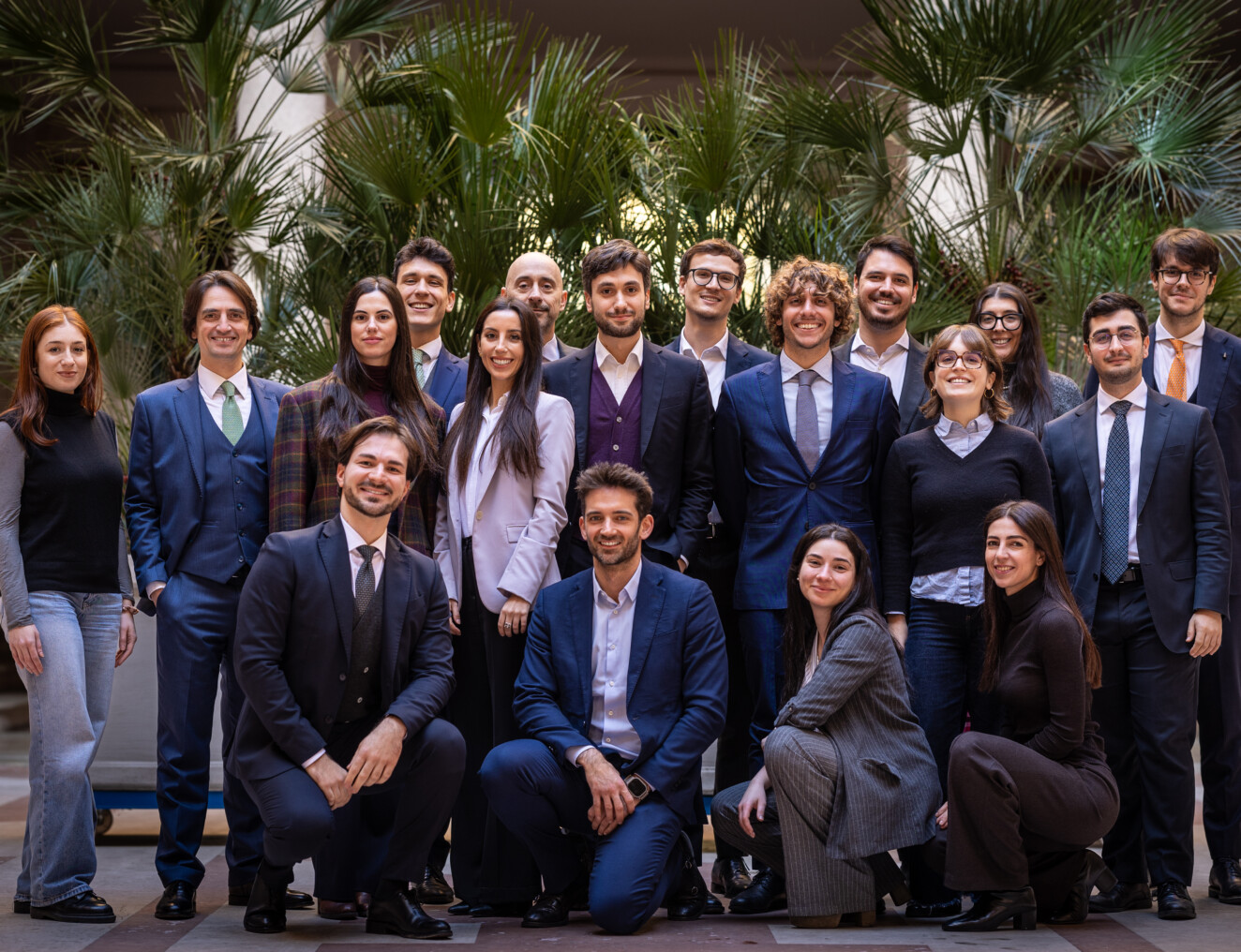
The digital transformation of the legal profession is no longer just about tools. It is about how legal work is structured. Against this backdrop, LCA Studio Legale is strengthening its Prompt Lawyer project, an internal task force of more than 20 professionals (lawyers and trainee lawyers). The team has an average age of 30, is gender-balanced, and is tasked with leading how the Firm’s use of artificial intelligence develops.
Prompt lawyers are legal professionals with responsibility for designing processes. Their job is to build AI into everyday workflows, from legal research and document analysis to operational organization. They act as true architects of digital processes, turning technological innovation into operational efficiency, better service quality and value for clients.
The core team designs workflows tailored to LCA’s needs and also works to spread skills widely across the Firm. By helping lawyers work with artificial intelligence systems, the prompt lawyers make sure the Firm adopts technology in a way that is informed, secure and consistent with professional standards.
Reverse mentoring: innovation through dialogue between generations
A distinctive feature of the project is reverse mentoring. In this organizational model, young professionals share their technology skills with partners and senior colleagues. The exchange works in both directions, bringing established legal experience together with the new logic of artificial intelligence. The result is a technological transition that is organic, shared and responsible.
Goals for 2026
The research and development program began more than six years ago with the support of advisors such as Alessandro Musella (Vectis) and the Sintia Lab team. Since then, more than 50 software solutions have been analyzed. LCA has also taken an active part in developing proprietary tools such as Aiseek, for analyzing document-based know-how, and E-Bibles, for advanced management of digital case files.
The strategic goal is clear: to achieve full technological synergy by 2026, with at least 70% of the Firm’s professionals using the artificial intelligence tools provided to them regularly and on their own.
A digital environment that supports the lawyer
The Prompt Lawyer project reflects a clear vision. For LCA, artificial intelligence does not replace the professional; it is an important addition to the professional’s own legal intelligence. With this in mind, the Firm has reorganized its structure into competence clusters, allocating resources according to each person’s aptitude for and ability to work with the new digital tools.
“The legal profession as our mentors knew it is bound to change, and is already changing, in a radical way. Just as it is no longer what it was years ago, the coming years will require us lawyers to shift paradigms and find new ways to make the most of our skills and practice our profession,” says associate Valerio Navarra.
“Working closely with senior partners has shown us that AI does not replace experience; it accelerates it. This ongoing dialogue between human intuition and computing power is what really drives our model,” adds associate Nicole Meyerhoff.
“Looking ahead, we picture a law firm where AI is invisible but indispensable. It won’t be what sets the firm apart; it will be part of how lawyers think, decide and work, so they can meet clients’ needs faster and with ever-higher quality,” they conclude.
LCA’s Prompt Lawyer group is led by the Management Committee together with Benedetto Lonato, and its members are: Elena Rachele Agnelli, Giancarlo Aiello, Emilio Barozzi, Alberto Basilico, Guido Berti, Christian Caserini, Francesco Chiarparin, Giacomo Cioccarelli, Vincenzo Coccoluto, Gianmarco Corradi, Maria Alessia Di Gioia, Annalisa Gobbo, Olivier Macquet, Nicole Meyerhoff, Fabrizio Miceli, Valerio Navarra, Federica Pecorini, Laura Scarola, Nicoletta Serao, Giuseppe Serenelli, Riccardo Sismondi, Veronica Scuro.